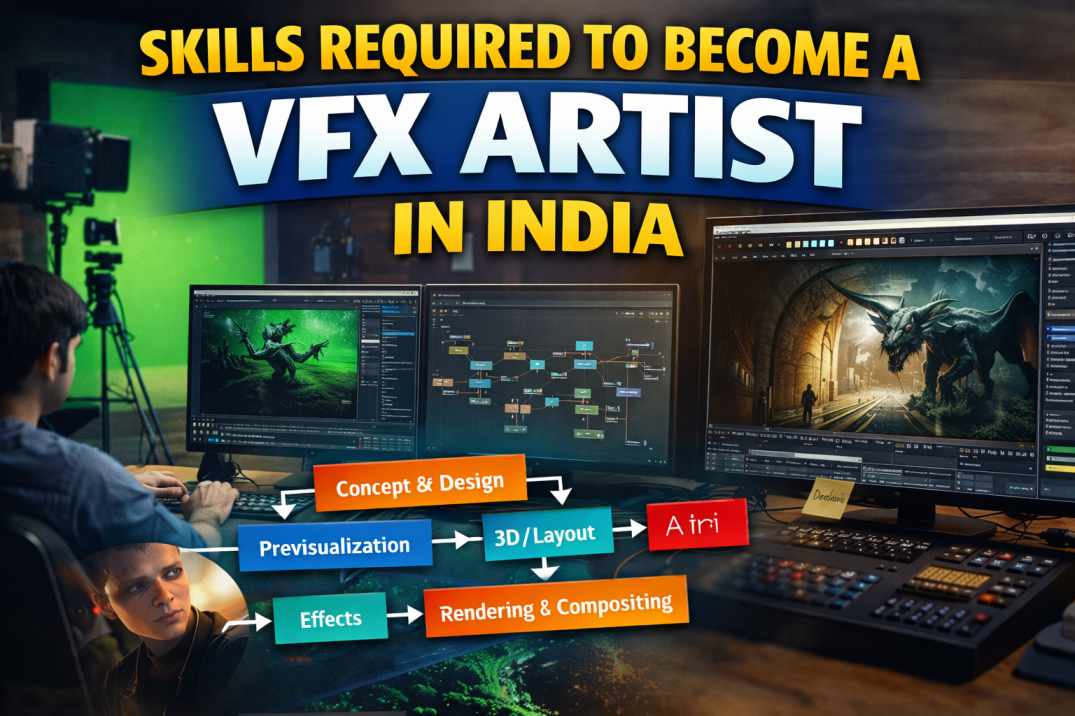
The Indian entertainment and media industry is witnessing rapid growth, with visual effects playing a central role in films, OTT platforms, advertising, gaming, and digital content. From blockbuster movies to web series and commercials, VFX has become an essential storytelling tool. For students and aspiring professionals, understanding the skills required to become a VFX artist in India is the first step toward building a successful career in this dynamic field.
This detailed guide explores technical, creative, and professional skills required to succeed as a VFX artist, along with insights into training, career paths, and how enrolling in a VFX artist skills course in Lucknow can help you enter the industry with confidence.
Understanding the Role of a VFX Artist
A VFX artist creates realistic or imaginative visuals that cannot be captured through live-action filming alone. These visuals are seamlessly integrated into footage to enhance storytelling. VFX artists work on films, TV shows, advertisements, music videos, games, and immersive digital experiences.
In India, VFX artists collaborate closely with directors, cinematographers, editors, and production teams. Their work involves combining creativity with technical precision to deliver visually compelling results under tight deadlines.
Why VFX Is a High-Growth Career in India
India has emerged as a global hub for VFX and post-production services. Factors driving this growth include:
Expansion of OTT platforms and digital content
Increased demand for high-quality visuals in films and advertising
Cost-effective production capabilities
Growing adoption of AR, VR, and immersive media
As demand increases, studios seek trained professionals with strong foundational and advanced skills, making structured training crucial.
Core Technical Skills Required to Become a VFX Artist
Strong Understanding of the VFX Pipeline
Every aspiring VFX artist must understand the complete production pipeline. This includes pre-production, production, and post-production stages. Knowing how each department functions helps artists collaborate effectively and work efficiently within studios.
Key stages include:
Concept and planning
Live-action shoot and green screen work
Rotoscopy and paint
Match moving and camera tracking
Compositing and rendering
Final output and delivery
A professional VFX artist skills course in Lucknow typically introduces students to this full workflow early in their training.
Proficiency in VFX Software and Tools
Software expertise is a core requirement in the VFX industry. Indian studios expect artists to be comfortable with industry-standard tools.
Essential software includes:
Compositing software for layering and integrating elements
3D software for modeling and animation
Editing tools for timing and sequencing
Color correction and finishing tools
Hands-on practice with professional software builds confidence and technical accuracy.
Compositing Skills
Compositing is the heart of VFX. It involves combining multiple visual elements into a single, seamless shot.
Key compositing skills include:
Keying green and blue screen footage
Rotoscoping complex elements
Color matching and light integration
Creating realistic shadows and reflections
Depth and perspective correction
Strong compositing skills help create believable visuals that blend naturally with live footage.
Rotoscopy and Paint Skills
Rotoscopy involves isolating elements frame by frame, while paint work removes unwanted objects or imperfections.
These skills are essential for:
Clean extractions
Wire and rig removal
Object cleanup
Background reconstruction
Precision and patience are critical in mastering these tasks.
Camera Tracking and Match Moving
Camera tracking, also known as match moving, allows 3D elements to align accurately with live-action footage.
A VFX artist must understand:
2D and 3D camera tracking
Scene reconstruction
Perspective matching
Motion analysis
Accurate tracking ensures that digital elements move naturally within a shot.
Creative Skills That Set Great VFX Artists Apart
Strong Visual Sense
Beyond software knowledge, a VFX artist must have a keen eye for detail. Understanding light, color, texture, and composition helps create realistic visuals.
Creative awareness includes:
Observing real-world lighting behavior
Understanding depth and scale
Maintaining visual continuity
These skills improve realism and storytelling impact.
Basic Knowledge of Cinematography
Understanding camera angles, lenses, depth of field, and shot composition helps VFX artists integrate effects more convincingly.
When artists know how scenes are filmed, they can match visual elements accurately, resulting in more professional output.
Storytelling Ability
VFX is not just about visual spectacle. It supports the story. A skilled VFX artist knows when to enhance a scene subtly and when to create dramatic impact.
Understanding narrative flow helps artists contribute creatively rather than mechanically.
Soft Skills Required for a Successful VFX Career
Attention to Detail
Small mistakes in lighting, color, or perspective can break realism. VFX artists must review their work carefully and refine it until it meets professional standards.
Time Management and Discipline
VFX projects often involve tight deadlines. Managing time efficiently and delivering quality work on schedule is essential in studio environments.
Teamwork and Communication
VFX production is collaborative. Artists must communicate effectively with supervisors, teammates, and clients. Accepting feedback and making revisions professionally is part of the job.
Problem-Solving Skills
Every VFX shot presents unique challenges. Artists must think creatively to find solutions using available tools and techniques.
Learning Path for Aspiring VFX Artists in India
Educational Background
While a formal degree is not mandatory, a background in art, design, media, or technology can be helpful. Many successful VFX artists start with specialized training rather than traditional degrees.
Professional Training and Skill Development
Structured training plays a crucial role in building industry-ready skills. Enrolling in a VFX artist skills course in Lucknow allows students to learn from experienced faculty, practice on real projects, and understand studio workflows.
Such courses typically offer:
Industry-aligned curriculum
Hands-on lab training
Portfolio development
Mentorship and placement assistance
Importance of a Strong Portfolio
In the VFX industry, your portfolio matters more than certificates. Recruiters look for quality work that demonstrates technical skills and creative thinking.
A good portfolio should:
Showcase before-and-after shots
Include breakdowns explaining your process
Highlight compositing, tracking, and cleanup work
Reflect consistency and attention to detail
Training programs often guide students in creating professional showreels.
Career Opportunities for VFX Artists in India
With the right skills, VFX artists can explore diverse career paths such as:
Compositor
Roto and Paint Artist
Match Move Artist
VFX Generalist
Motion Graphics Artist
FX Technical Artist
Freelance VFX Artist
Indian VFX professionals work on films, OTT content, advertisements, gaming projects, and international productions.
Why Choose a VFX Artist Skills Course in Lucknow
Lucknow is emerging as an educational hub with access to quality training at competitive costs. Choosing a local, industry-focused institute provides personalized mentoring, practical exposure, and strong foundational training.
A specialized VFX artist skills course in Lucknow helps students:
Learn industry-standard tools
Gain real-world project experience
Build job-ready portfolios
Access placement and career guidance
Industry Trends Shaping the Future of VFX in India
The VFX industry continues to evolve with advancements in technology. Current trends include:
Real-time VFX and virtual production
Increased use of Unreal Engine
Growth of AR and VR experiences
Integration of AI in post-production
Expansion of OTT content
Staying updated with these trends ensures long-term career growth.
Final Thoughts
Building a career in VFX requires a balanced combination of technical expertise, creative vision, and professional discipline. Understanding the skills required to become a VFX artist in India helps aspiring artists prepare effectively for industry demands.
With the right training, hands-on practice, and a strong portfolio, students can turn their passion for visuals into a rewarding profession. Enrolling in a structured VFX artist skills course in Lucknow can provide the guidance, exposure, and confidence needed to succeed in this competitive yet exciting industry.