Graphic design has become one of the most in-demand creative professions in today’s digital world. From brand logos and advertisements to social media graphics and website interfaces, visual design plays a major role in how businesses communicate with their audiences. As companies increasingly rely on visual content to attract and engage customers, the demand for skilled graphic designers continues to grow.
However, becoming a successful graphic designer requires more than just creativity. It involves a combination of artistic ability, technical expertise, problem-solving skills, and a strong understanding of design principles. Many aspiring designers choose to enroll in a graphic designer skills course in Lucknow to develop these abilities and build a strong foundation for their careers.
In this article, we will explore the most important skills needed to succeed as a graphic designer and how structured training can help you build these skills effectively.
Understanding the Role of a Graphic Designer
Before exploring the essential skills, it is important to understand what graphic designers actually do. Graphic designers are visual communicators who create designs that convey messages clearly and effectively. Their work includes creating logos, marketing materials, posters, website layouts, packaging designs, digital advertisements, and social media content.
Graphic designers work with typography, colors, images, and layout structures to create visually appealing designs that align with a brand’s identity. Their goal is to communicate ideas through visuals that capture attention and deliver information in an engaging way.
A professional graphic designer skills course in Lucknow usually focuses on teaching students how to combine creativity with technical tools to produce impactful designs for various industries.
Creativity and Visual Thinking
Creativity is one of the most fundamental skills for any graphic designer. The ability to think creatively allows designers to generate unique ideas and transform concepts into compelling visuals. Creativity involves exploring different perspectives, experimenting with design styles, and developing innovative solutions for visual communication challenges.
Creative thinking helps designers create designs that stand out in a competitive market. Whether designing a brand identity or developing a marketing campaign, creativity allows designers to produce work that captures attention and leaves a lasting impression.
While some people naturally possess creative instincts, creativity can also be developed through practice, experimentation, and structured learning. Many design training programs encourage students to work on creative projects that strengthen their visual imagination.
Knowledge of Design Principles
Understanding the core principles of design is essential for creating visually balanced and professional designs. These principles guide how different elements interact with each other in a composition.
Some of the most important design principles include alignment, contrast, hierarchy, balance, repetition, and proximity. These principles help designers organize visual elements in a way that makes the design easy to understand and aesthetically pleasing.
For example, hierarchy helps viewers focus on the most important information first, while contrast ensures that elements stand out clearly. Alignment ensures a structured layout, while repetition creates consistency across designs.
Students enrolled in a graphic designer skills course in Lucknow typically learn how to apply these principles to create visually appealing and effective designs.
Typography Skills
Typography plays a critical role in graphic design. It involves the art of arranging text in a way that enhances readability and visual appeal. Good typography can significantly influence how a message is perceived by an audience.
Graphic designers must understand how to select appropriate fonts, adjust spacing between letters and lines, and combine different typefaces effectively. Typography also involves understanding how text interacts with other visual elements within a design.
For example, a bold font may be used for headlines to capture attention, while a simple and readable font may be used for body text. The combination of fonts must be balanced so that the overall design remains clear and professional.
Typography is a key component of most graphic design training programs and is an essential skill for creating professional design work.
Mastery of Graphic Design Software
Modern graphic design relies heavily on digital tools. Professional designers use specialized software to create, edit, and refine their work. Mastering these tools is essential for producing high-quality designs efficiently.
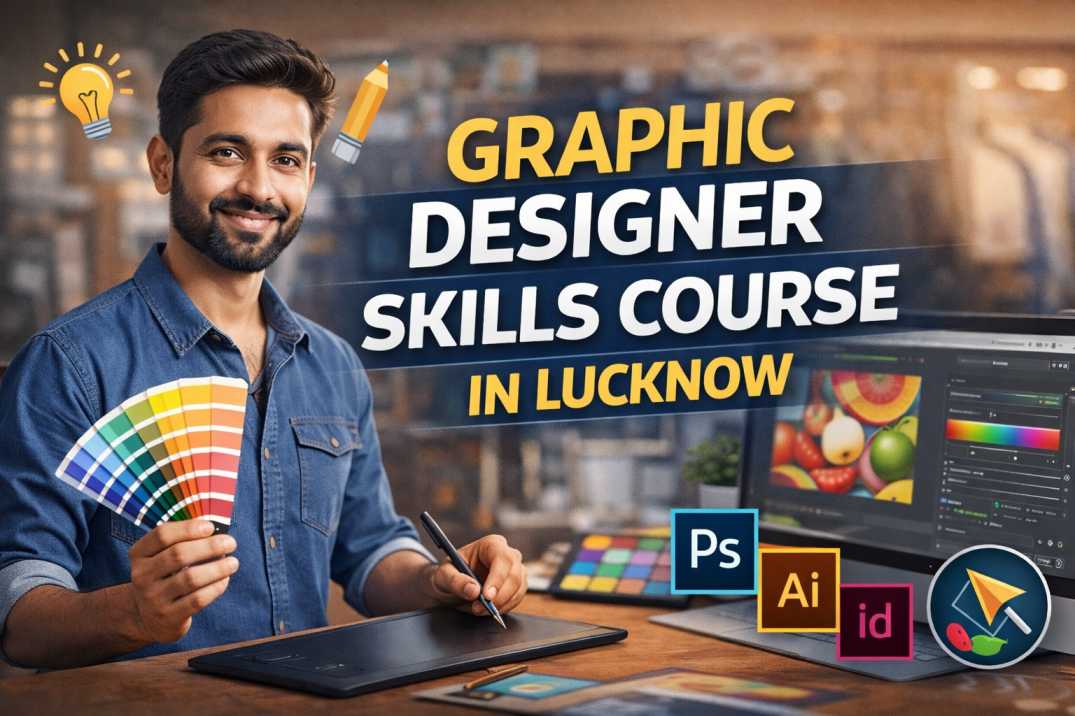
Some of the most widely used graphic design software includes Adobe Photoshop, Adobe Illustrator, and Adobe InDesign. Photoshop is commonly used for image editing and digital artwork, while Illustrator is used for vector graphics such as logos and illustrations. InDesign is often used for layout design, especially for magazines, brochures, and books.
Many institutes offering a graphic designer skills course in Lucknow provide hands-on training with these tools, allowing students to develop practical experience with industry-standard software.
Color Theory and Visual Harmony
Color is one of the most powerful elements in design. The right color combinations can evoke emotions, reinforce brand identity, and influence audience perception. Graphic designers must understand color theory to use colors effectively in their designs.
Color theory involves understanding color relationships, such as complementary, analogous, and triadic color schemes. Designers also learn how colors influence mood and visual balance.
For example, blue often represents trust and professionalism, while red may convey energy and urgency. By understanding how colors interact and influence perception, designers can create visually appealing designs that communicate the desired message.
Learning color theory is a fundamental part of graphic design education and is emphasized in most professional training courses.
Layout and Composition Skills
Layout design refers to how different elements are arranged within a design. A well-structured layout helps guide the viewer’s attention and ensures that information is presented clearly.
Graphic designers must understand how to organize text, images, and other visual elements to create balanced compositions. Proper spacing, alignment, and visual hierarchy are essential for creating layouts that are easy to navigate.
For example, a magazine page or website layout must present information in a logical order so that readers can quickly understand the content. A poorly structured layout can confuse viewers and reduce the effectiveness of the design.
Learning layout techniques is an important part of developing professional design skills.
Communication and Concept Development
Graphic design is not just about making things look attractive. Designers must also communicate ideas clearly through visuals. This requires strong concept development and communication skills.
Designers often work with clients, marketing teams, and creative directors. They must understand the project requirements and translate them into visual concepts that align with the brand’s goals.
Effective communication helps designers understand feedback, refine their work, and deliver designs that meet client expectations. The ability to explain design decisions and present ideas confidently is also an important professional skill.
Attention to Detail
Attention to detail is crucial for producing professional-quality designs. Small errors in alignment, spacing, color selection, or typography can affect the overall appearance of a design.
Successful graphic designers carefully review their work to ensure that every element is consistent and visually balanced. They pay close attention to details such as pixel alignment, font spacing, color consistency, and image resolution.
Developing strong attention to detail helps designers produce polished work that meets professional standards.
Time Management and Project Handling
Graphic designers often work on multiple projects simultaneously, especially in agencies or freelance environments. Effective time management is essential for meeting deadlines and maintaining productivity.
Designers must plan their workflow, prioritize tasks, and allocate time efficiently for research, concept development, design creation, and revisions.
Learning how to manage time effectively ensures that designers can handle complex projects without compromising quality. Many professional courses include real-world assignments that help students develop project management skills.
Adaptability and Continuous Learning
The design industry evolves rapidly as new technologies, tools, and trends emerge. Successful graphic designers must stay updated with the latest design trends and industry developments.
Adaptability allows designers to learn new software, explore different design styles, and experiment with innovative techniques. Continuous learning helps designers remain competitive and relevant in the evolving creative industry.
Enrolling in a graphic designer skills course in Lucknow provides students with exposure to modern tools and design practices that prepare them for future industry demands.
Building a Strong Portfolio
A strong portfolio is one of the most important assets for a graphic designer. It showcases the designer’s skills, creativity, and versatility to potential employers or clients.
A well-curated portfolio typically includes a variety of projects such as logo designs, branding concepts, posters, social media graphics, packaging designs, and website layouts.
Many professional training programs guide students in creating portfolio projects that demonstrate their capabilities. A compelling portfolio increases the chances of securing job opportunities in design studios, advertising agencies, and digital marketing companies.
Career Opportunities for Graphic Designers
Graphic design offers a wide range of career opportunities across different industries. Skilled designers can work in advertising agencies, media companies, marketing firms, publishing houses, and technology companies.
Some designers choose to specialize in fields such as branding, UI/UX design, motion graphics, or digital illustration. Others pursue freelance careers, offering design services to clients around the world.
With the growth of digital media and online businesses, the demand for skilled graphic designers continues to expand. Developing strong design skills and technical expertise can open doors to rewarding creative careers.
Conclusion
Graphic design is a dynamic and rewarding profession that combines creativity, technology, and communication. To succeed in this field, designers must develop a wide range of skills, including creativity, typography, layout design, color theory, software proficiency, and effective communication.
Structured training plays a vital role in helping aspiring designers build these skills systematically. Enrolling in a graphic designer skills course in Lucknow can provide hands-on learning, industry exposure, and guidance from experienced professionals.
By developing strong design fundamentals, mastering digital tools, and continuously improving their skills, aspiring designers can build successful careers in the rapidly growing world of visual communication.