
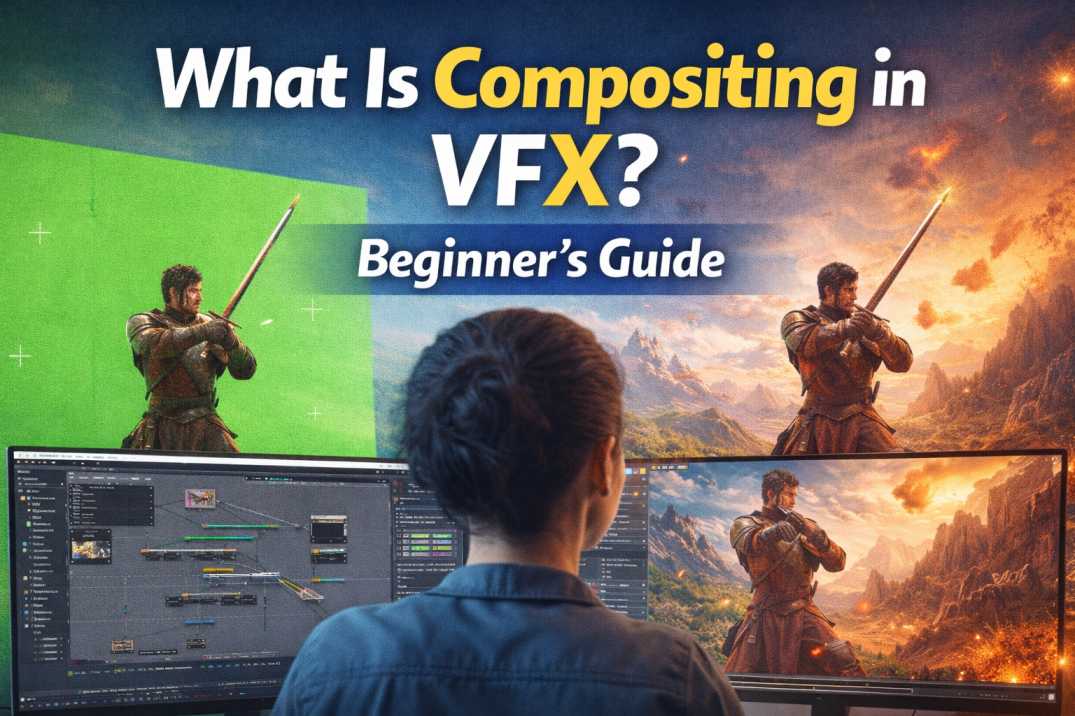
Visual effects have transformed the way stories are told in films, web series, advertisements, and digital media. From breathtaking fantasy landscapes to realistic explosions and invisible set extensions, VFX plays a critical role in modern entertainment. One of the most important stages in the VFX pipeline is compositing.
If you are exploring a career in visual effects or considering enrolling in a compositing course in Lucknow, understanding the fundamentals of compositing is the first step. This beginner’s guide explains what compositing is, how it works, why it is important, and how you can build a career in this exciting field.
Understanding VFX and the Production Pipeline
Before diving into compositing, it is essential to understand where it fits in the VFX process.
A typical film or advertisement production pipeline includes:
Pre-production
Production (shooting)
Post-production
Visual effects work happens mainly during post-production. This stage includes editing, color correction, sound design, and VFX integration.
Within VFX itself, there are multiple stages:
Modeling
Texturing
Rigging
Animation
Lighting
Rendering
Compositing
Compositing is usually the final stage where all visual elements are combined to create the finished shot.
What Is Compositing in VFX?
Compositing is the process of combining multiple visual elements from different sources into a single seamless image or video frame. These elements may include live-action footage, computer-generated imagery (CGI), matte paintings, green screen shots, and special effects.
In simple terms, compositing is where everything comes together.
For example:
An actor filmed in front of a green screen
A digitally created background
CGI creatures
Smoke, fire, or rain effects
All these layers are blended together by a compositor to make the scene look realistic and natural.
Without compositing, VFX elements would appear separate and unconvincing.
Why Is Compositing Important?
Compositing ensures that all visual components match in:
Lighting
Color
Perspective
Depth
Motion
Even the best 3D animation or CGI model can look fake if not composited properly. A skilled compositor adjusts shadows, reflections, color balance, and grain to integrate elements perfectly.
In many cases, compositing makes visual effects invisible. Viewers should not notice the effect — they should believe the scene is real.
Types of Compositing Techniques
Compositing involves various techniques, each serving a specific purpose.
Green Screen Compositing
Actors are filmed against a green or blue background. The compositor removes the background and replaces it with a digital environment.
Rotoscoping
This involves manually tracing objects or people in footage to isolate them for editing or effect application.
Color Correction and Matching
Ensures all elements have consistent lighting and color tones.
Keying
Removing a specific color background, commonly used in green screen footage.
Matte Painting Integration
Blending digitally painted backgrounds with live footage.
Motion Tracking
Matching CGI elements to the movement of the camera.
Each of these techniques is taught in detail in a structured compositing course in Lucknow.
Software Used in Compositing
Professional compositors use industry-standard software to achieve high-quality results.
Commonly used tools include:
Nuke
Adobe After Effects
Fusion
Silhouette
Mocha Pro
Among these, Nuke is widely used in high-end film and VFX studios. Learning such software enhances employability in the industry.
What Skills Does a Compositor Need?
Compositing is both technical and artistic. A successful compositor must develop:
Strong understanding of lighting and color
Attention to detail
Patience and precision
Understanding of camera angles and perspective
Problem-solving ability
Technical knowledge alone is not enough. Artistic sense plays a major role in creating realistic visuals.
Where Is Compositing Used?
Compositing is used across multiple industries, not just films.
Film Industry
Creating fantasy worlds, action sequences, and invisible effects.
Television and OTT Platforms
Enhancing scenes, adding environments, and correcting footage.
Advertising
Integrating products into digital environments.
Gaming
Blending visual elements for promotional trailers.
Corporate Videos
Creating explainer visuals and animated presentations.
This growing demand increases the value of pursuing a compositing course in Lucknow.
Compositing in Indian Cinema
Indian cinema has significantly advanced in VFX. Large-scale films use compositing extensively for:
Battle sequences
Historical recreations
Set extensions
Digital crowds
Weather effects
The demand for skilled compositors continues to grow as production standards rise.
Career Opportunities in Compositing
After completing training, students can work as:
Junior Compositor
Roto Artist
VFX Compositor
Digital Compositor
Matchmove Artist
Paint Artist
With experience, professionals can become:
Senior Compositor
VFX Supervisor
Compositing Lead
Freelancing and remote work opportunities are also expanding.
Compositing Course in Lucknow – Why It Matters
Lucknow is emerging as a growing hub for creative education. With increasing digital media production and online content demand, local institutes are offering professional VFX training programs.
Enrolling in a compositing course in Lucknow offers several benefits:
Access to industry-standard software training
Guidance from experienced faculty
Hands-on practical projects
Portfolio development support
Placement assistance
Structured training ensures you understand both theory and practical workflow.
What You Learn in a Compositing Course
A well-designed compositing course typically covers:
Introduction to VFX pipeline
Green screen keying
Rotoscoping techniques
Color grading basics
Camera tracking
Layer management
Advanced compositing workflows
Portfolio creation
Practical assignments help students build real-world skills.
Salary Scope for Compositors
Entry-level compositors may start with competitive salaries in production houses and studios. With experience and advanced skills, income grows steadily.
Freelance compositors working on international projects can earn even more.
The compositing field offers long-term career growth due to increasing demand in digital content creation.
Challenges in Compositing
Like any creative field, compositing requires dedication.
Common challenges include:
Long working hours during project deadlines
Attention to minute details
Learning complex software tools
Constantly upgrading skills
However, consistent practice and strong mentorship help overcome these challenges.
Future Scope of Compositing
The future of compositing looks promising due to:
Growth of OTT platforms
Expansion of regional cinema
Rise of digital marketing videos
Increasing gaming industry demand
Emergence of AR and VR content
As technology advances, compositing will continue to evolve, creating more job opportunities.
Why Choose Compositing as a Career?
Compositing offers:
Creative satisfaction
High demand in media industry
Opportunities in films and advertising
Remote work flexibility
Global career prospects
For students passionate about visual storytelling and digital art, compositing provides a rewarding path.
How to Start Your Journey
If you are interested in VFX and want to specialize in compositing, start by:
Researching reputable institutes
Understanding course curriculum
Checking faculty experience
Reviewing student portfolios
Practicing basic editing and design tools
Choosing a professional compositing course in Lucknow can provide structured guidance and career direction.
Building a Strong Portfolio
In VFX, your portfolio matters more than degrees.
Include:
Green screen compositing projects
Before-and-after comparisons
Color correction samples
Rotoscoping work
Short VFX sequences
A strong showreel increases placement opportunities.
Final Thoughts
Compositing is the art of making the impossible look real. It is the final and most crucial stage in the VFX pipeline where creativity meets technical precision. From blockbuster films to digital advertisements, compositors play a vital role in shaping visual storytelling.
For aspiring artists in Uttar Pradesh, pursuing a compositing course in Lucknow can open doors to exciting opportunities in the film, media, and digital industries.
With the right training, practice, and dedication, you can build a successful career in this fast-growing field.