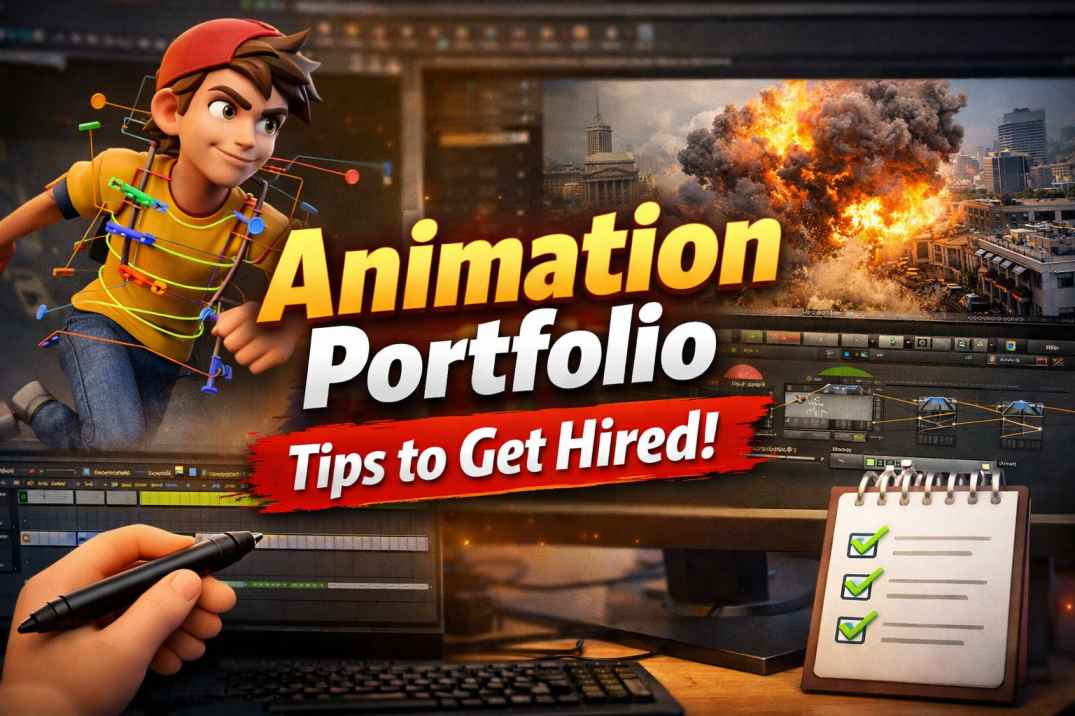
In today’s competitive creative industry, your portfolio is more than just a collection of work—it is your identity, your skill showcase, and your strongest tool to secure a job. Whether you aim to become a 3D animator, VFX artist, game designer, or motion graphics specialist, your portfolio determines how recruiters perceive your talent.
For aspiring artists searching for practical animation portfolio tips in Lucknow, understanding what studios truly look for can make all the difference between getting shortlisted or being overlooked. A well-crafted animation portfolio is not about quantity; it is about clarity, quality, and storytelling.
This blog will guide you step-by-step on how to build an animation portfolio that stands out and helps you get hired.
Why Your Animation Portfolio Matters More Than Your Resume
In the animation and VFX industry, recruiters rarely rely on resumes alone. Studios want to see what you can actually create. Your portfolio acts as visual proof of your abilities.
A strong portfolio demonstrates:
- Your understanding of animation principles
- Your creativity and storytelling ability
- Your technical proficiency in tools
- Your attention to detail
- Your consistency in quality
Many top recruiters spend less than a minute reviewing a portfolio before deciding whether to continue watching or move on. This makes first impressions extremely important.
Understanding Industry Expectations
Before you start building your portfolio, it is essential to understand what studios expect. Different roles require different types of portfolios.
For example:
- A 3D Animator should focus on body mechanics, acting shots, and character animation
- A VFX Artist should showcase compositing, tracking, and realistic effects
- A Game Artist should highlight assets, environments, and optimization
- A UI/UX Designer should present user flows and interface design
Institutes like Arena Animation Lucknow often guide students in tailoring portfolios based on specific career paths, which significantly increases hiring chances.
Key Elements of a Job-Winning Animation Portfolio
1. A Strong Demo Reel
Your demo reel is the most important part of your portfolio. It is a short video (usually 1–2 minutes) showcasing your best work.
A good demo reel should:
- Start with your strongest shot
- Be concise and engaging
- Include only your best work
- Clearly mention what you contributed
Avoid adding weak or unfinished work just to increase duration. Quality always wins over quantity.
2. Focus on Fundamentals
Studios value strong fundamentals more than flashy visuals. Even simple animations can impress recruiters if the basics are done right.
Key fundamentals include:
- Timing and spacing
- Weight and balance
- Movement realism
- Acting and expressions
A bouncing ball animation with perfect physics can sometimes be more impressive than a complex but poorly executed scene.
3. Showcase Specialization
One of the most important animation portfolio tips in Lucknow is to avoid being too general. Instead of showing everything, focus on your area of expertise.
For example:
- If you are a character animator, show acting and emotion
- If you are into modeling, display topology and detailing
- If you are a VFX artist, focus on compositing and effects
Recruiters prefer specialists over generalists for entry-level roles.
4. Keep It Short and Impactful
Recruiters do not have time to watch long reels. Ideally:
- Demo reel length: 60–90 seconds
- Number of projects: 4–8 high-quality works
Make every second count. Remove anything that feels repetitive or average.
5. Show Your Process
Including breakdowns can significantly improve your portfolio.
For example:
- Wireframes for 3D models
- Before-and-after VFX shots
- Storyboards for animation sequences
- Layer breakdowns in compositing
This shows that you understand the technical process, not just the final output.
6. Use Professional Presentation
Presentation matters as much as content. A poorly presented portfolio can reduce the impact of even great work.
Ensure that:
- Your videos are high resolution
- Audio (if used) is clear
- Titles and credits are readable
- Your name and contact details are visible
A clean, professional layout reflects seriousness and attention to detail.
7. Include Only Original Work
Always showcase work that you have created yourself. If you worked in a team:
- Clearly mention your role
- Specify your contributions
Honesty is crucial. Misrepresenting your work can harm your credibility.
8. Build an Online Presence
Today, having an online portfolio is essential. Platforms like:
- ArtStation
- Behance
- Personal websites
help you reach a wider audience and make it easier for recruiters to access your work.
Make sure your portfolio is easy to navigate and loads quickly.
Common Mistakes to Avoid
Many students make avoidable mistakes that reduce their chances of getting hired.
Some common errors include:
Adding Too Much Work
A long portfolio with average work is less effective than a short one with excellent work.
Ignoring Fundamentals
Focusing only on software skills without understanding animation basics weakens your portfolio.
Poor Editing
Bad transitions, unnecessary effects, or long intros can distract recruiters.
Lack of Focus
Mixing unrelated work without a clear direction confuses viewers.
No Contact Information
Always include your name, email, and phone number.
How to Tailor Your Portfolio for Jobs in Lucknow
The creative industry in Lucknow is growing steadily, with opportunities in animation studios, advertising agencies, media houses, and gaming companies.
To stand out locally:
- Focus on industry-relevant skills
- Build projects aligned with real-world requirements
- Stay updated with current trends
- Participate in workshops and internships
Following targeted animation portfolio tips in Lucknow can help you align your portfolio with what local recruiters are actively seeking.
Importance of Mentorship and Feedback
Creating a strong portfolio is not a one-time process. It requires continuous improvement.
Seek feedback from:
- Industry professionals
- Trainers and mentors
- Peers and creative communities
Institutions like Arena Animation emphasize portfolio reviews, which help students refine their work and meet industry standards.
Portfolio Ideas for Beginners
If you are just starting, here are some project ideas:
- Walk cycles and run cycles
- Character expressions
- Short story animations
- Product visualization
- Environment design
- Basic VFX shots
Start simple and gradually move to complex projects as your skills improve.
The Role of Software in Your Portfolio
While creativity is key, technical skills also matter. Industry-standard tools include:
- Autodesk Maya
- Blender
- Unreal Engine
- Adobe After Effects
- Nuke
- ZBrush
However, remember that tools are just mediums. What truly matters is how effectively you use them.
How to Make Your Portfolio Stand Out
To truly differentiate yourself:
- Tell a story through your work
- Show emotion and creativity
- Keep improving and updating
- Stay consistent in style and quality
- Add a personal touch
Recruiters often remember portfolios that feel unique and engaging.
Final Thoughts
Building a strong animation portfolio takes time, effort, and continuous learning. It is not about showcasing everything you have done, but about presenting your best work in the most effective way.
If you follow the right approach and apply these animation portfolio tips in Lucknow, you can significantly increase your chances of getting hired in the animation and VFX industry.
Focus on quality, stay consistent, seek feedback, and keep improving. Your portfolio is your gateway to the creative world—make it powerful enough to open doors.