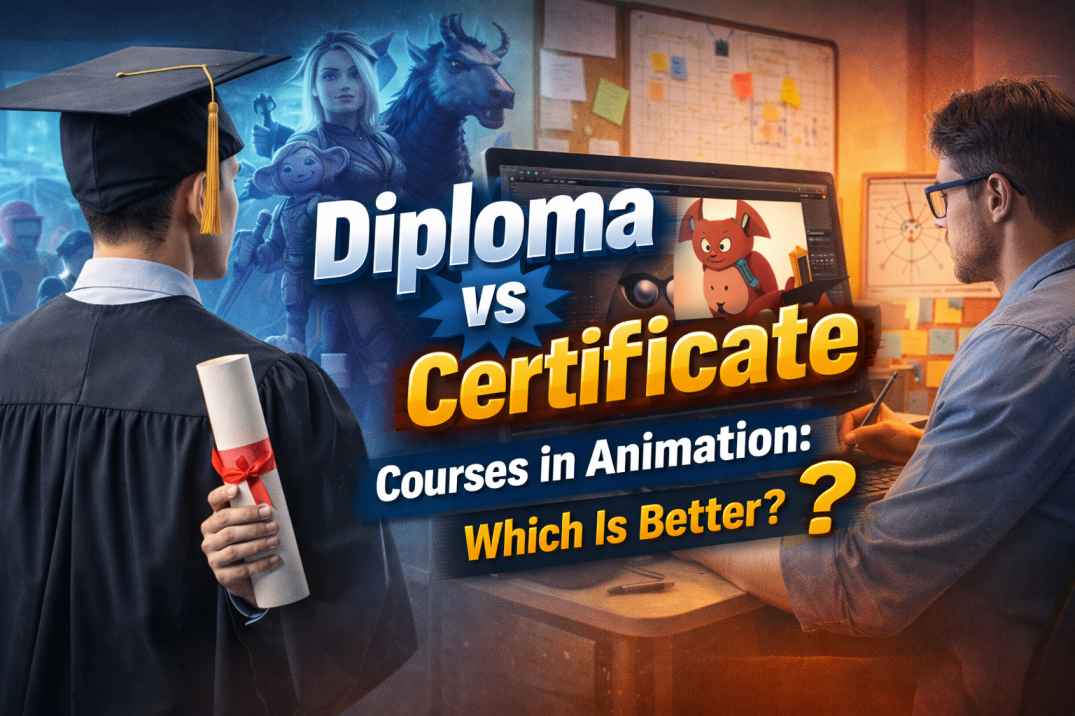
Choosing the right course is one of the most important decisions for anyone planning to build a career in animation. With the creative industry growing rapidly, aspiring students often find themselves confused between two popular options — diploma courses and certificate courses. Understanding the difference between the two can help you make a smarter, career-focused decision.
If you are searching for clarity on animation diploma vs certificate course, this detailed guide will help you understand their structure, benefits, career scope, and which option suits your goals best.
Understanding Animation Education
Animation is a skill-based industry where both creativity and technical expertise play a crucial role. Whether it’s 2D animation, 3D animation, VFX, gaming, or motion graphics, the industry demands professionals who are trained in software tools, storytelling, and production workflows.
To meet this demand, training institutes offer different types of programs, mainly categorized into diploma courses and certificate courses. While both aim to provide animation skills, they differ significantly in depth, duration, and career outcomes.
What Is a Diploma Course in Animation?
A diploma course in animation is a comprehensive, long-term program designed to provide in-depth knowledge and practical training. These courses typically cover multiple aspects of animation, including design fundamentals, software training, and project-based learning.
Diploma programs usually range from 12 months to 24 months depending on specialization. They are structured to transform beginners into industry-ready professionals.
Key features of diploma courses include:
- Detailed curriculum covering multiple domains such as animation, VFX, gaming, and design
- Extensive hands-on training using industry-standard tools
- Portfolio development with real-world projects
- Exposure to production pipelines and workflows
- Placement assistance and career guidance
Diploma courses are ideal for students who are serious about building a long-term career in animation and want complete professional training.
What Is a Certificate Course in Animation?
Certificate courses are short-term programs focused on specific skills or tools within animation. These courses are usually designed for quick learning and skill enhancement.
The duration of certificate courses can range from a few weeks to 6 months. They are more focused and less comprehensive compared to diploma programs.
Key features of certificate courses include:
- Short duration and flexible schedules
- Focus on specific software or techniques
- Lower cost compared to diploma programs
- Quick skill acquisition
- Ideal for beginners exploring animation or professionals upgrading skills
Certificate courses are suitable for those who want to learn a particular skill quickly or test their interest in the field before committing to a full program.
Animation Diploma vs Certificate Course: Key Differences
Understanding the differences between diploma and certificate courses is crucial to making the right choice.
1. Duration
Diploma courses are long-term programs, typically lasting one to two years. Certificate courses are short-term and can be completed within a few weeks or months.
2. Depth of Learning
Diploma courses provide in-depth knowledge across multiple subjects, while certificate courses focus on a specific skill or tool.
3. Curriculum Structure
Diploma programs follow a structured learning path that includes fundamentals, advanced techniques, and projects. Certificate courses are more focused and limited in scope.
4. Career Opportunities
Diploma holders are more likely to secure full-time roles in studios and companies. Certificate holders may need additional training or experience to compete for similar roles.
5. Cost
Diploma courses generally have higher fees due to their comprehensive nature. Certificate courses are more affordable.
6. Portfolio Development
Diploma courses emphasize building a strong portfolio, which is crucial for job placement. Certificate courses may not offer extensive portfolio support.
7. Industry Exposure
Diploma programs often include workshops, internships, and placement support. Certificate courses usually lack this level of exposure.
Which One Is Better for You?
The answer to the question animation diploma vs certificate course depends on your goals, time availability, and career plans.
If you are a student who has just completed school or college and wants to enter the animation industry professionally, a diploma course is the better choice. It provides complete training, builds confidence, and increases employability.
On the other hand, if you are a working professional or someone who wants to learn a specific skill quickly, a certificate course may be more suitable.
Advantages of Diploma Courses
Diploma courses offer several benefits that make them a preferred choice for serious learners.
They provide a complete understanding of animation from basics to advanced levels. Students get the opportunity to work on real projects, which helps in building a strong portfolio.
Diploma programs also offer exposure to industry practices, making students job-ready. Many institutes provide placement assistance, which can be a significant advantage for beginners.
Another major benefit is versatility. Diploma holders can explore multiple career paths such as animation, VFX, gaming, and design.
Advantages of Certificate Courses
Certificate courses are ideal for quick learning and skill enhancement. They are less time-consuming and more affordable, making them accessible to a wider audience.
These courses are perfect for individuals who want to upgrade their skills or learn new software without committing to a long-term program.
They also provide flexibility, allowing learners to balance their studies with work or other commitments.
Career Opportunities After Each Course
The career opportunities available after completing either course depend on the level of expertise and portfolio quality.
Diploma graduates can apply for roles such as:
- 2D or 3D Animator
- VFX Artist
- Graphic Designer
- Game Designer
- Motion Graphics Artist
- Video Editor
- UI/UX Designer
Certificate course holders may find opportunities in entry-level roles or freelance projects, especially if they specialize in a specific skill.
However, to compete in the industry, they may need additional experience or advanced training.
Industry Expectations
The animation industry values skills, creativity, and practical knowledge more than formal qualifications. However, structured learning plays a crucial role in building these skills.
Employers often prefer candidates who have undergone comprehensive training and can demonstrate their abilities through a strong portfolio.
This is where diploma courses have an edge, as they focus heavily on project work and real-world application.
Cost vs Return on Investment
While diploma courses require a higher investment, they often provide better returns in terms of job opportunities and salary potential.
Certificate courses are more budget-friendly but may not offer the same level of career growth unless combined with additional learning.
Choosing the right course should be based on long-term goals rather than just cost considerations.
Flexibility and Learning Approach
Certificate courses offer greater flexibility and are suitable for those who prefer short-term learning.
Diploma courses require more commitment but provide a structured and disciplined learning environment.
Your choice should depend on your availability and willingness to invest time in learning.
Combining Both Options
In some cases, students choose to start with a certificate course to understand the basics and then move on to a diploma program for advanced learning.
This approach allows them to explore their interest before committing to a long-term course.
Similarly, professionals who have completed a diploma can take certificate courses to upgrade their skills and stay updated with industry trends.
Final Thoughts
When comparing animation diploma vs certificate course, there is no one-size-fits-all answer. Both options have their own advantages and are designed for different types of learners.
If your goal is to build a strong career in animation with long-term growth and stability, a diploma course is the better choice. It provides comprehensive training, industry exposure, and better job opportunities.
If you are looking for quick learning, skill enhancement, or exploring the field, a certificate course can be a good starting point.
Ultimately, the right choice depends on your career goals, budget, and commitment level. By understanding the differences and evaluating your needs, you can choose a path that leads to a successful and fulfilling career in animation.